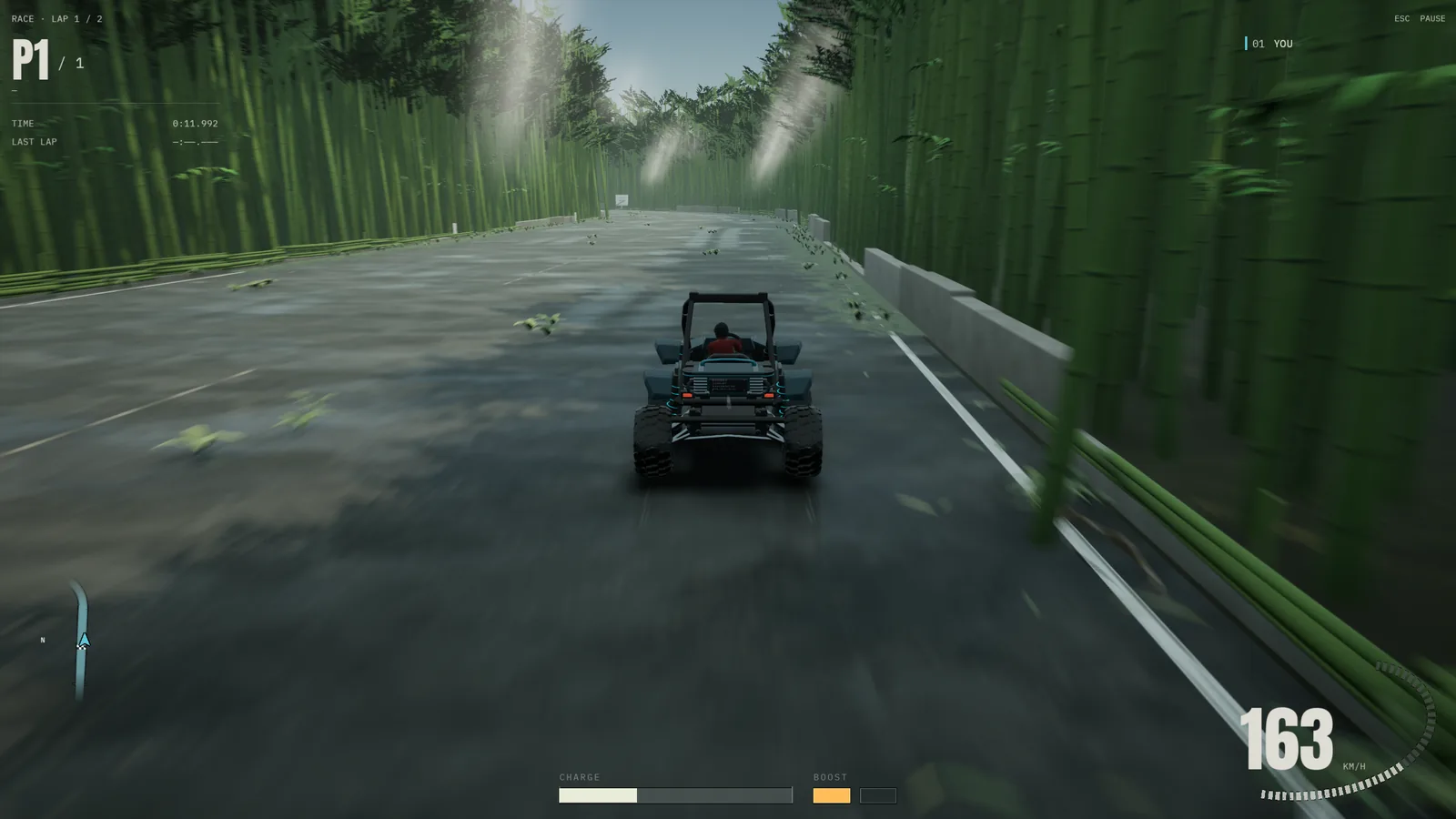
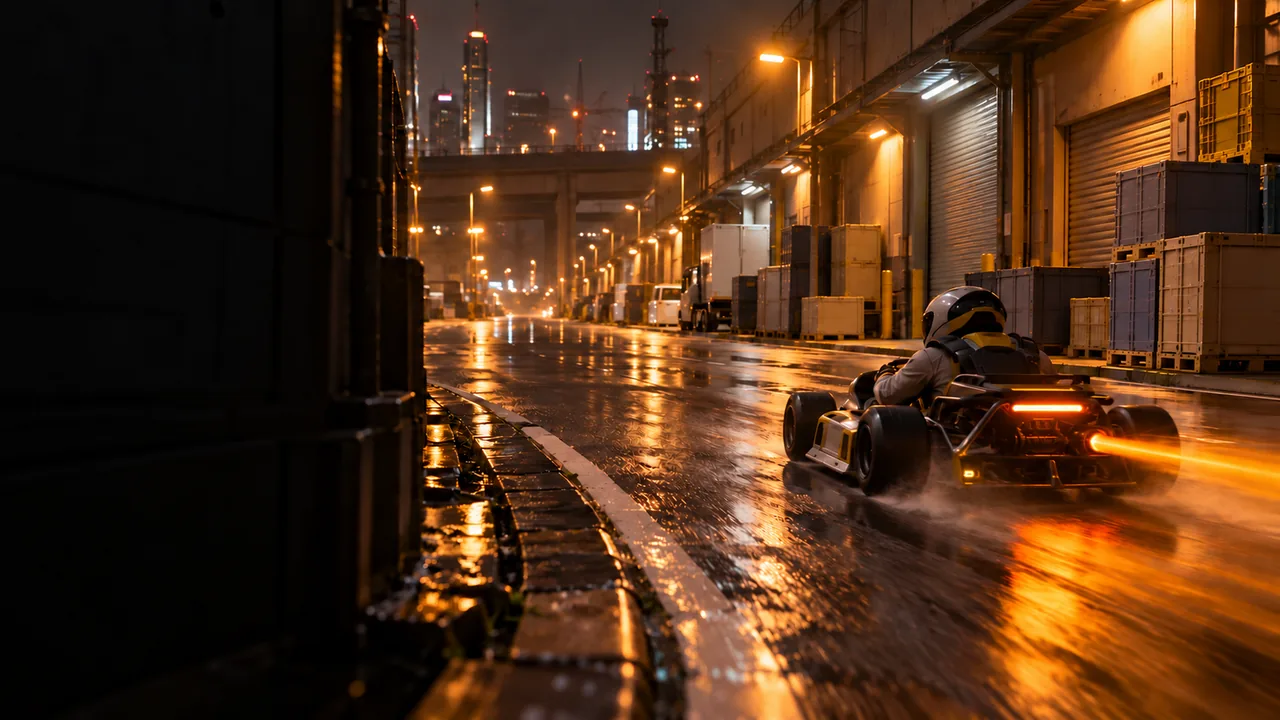
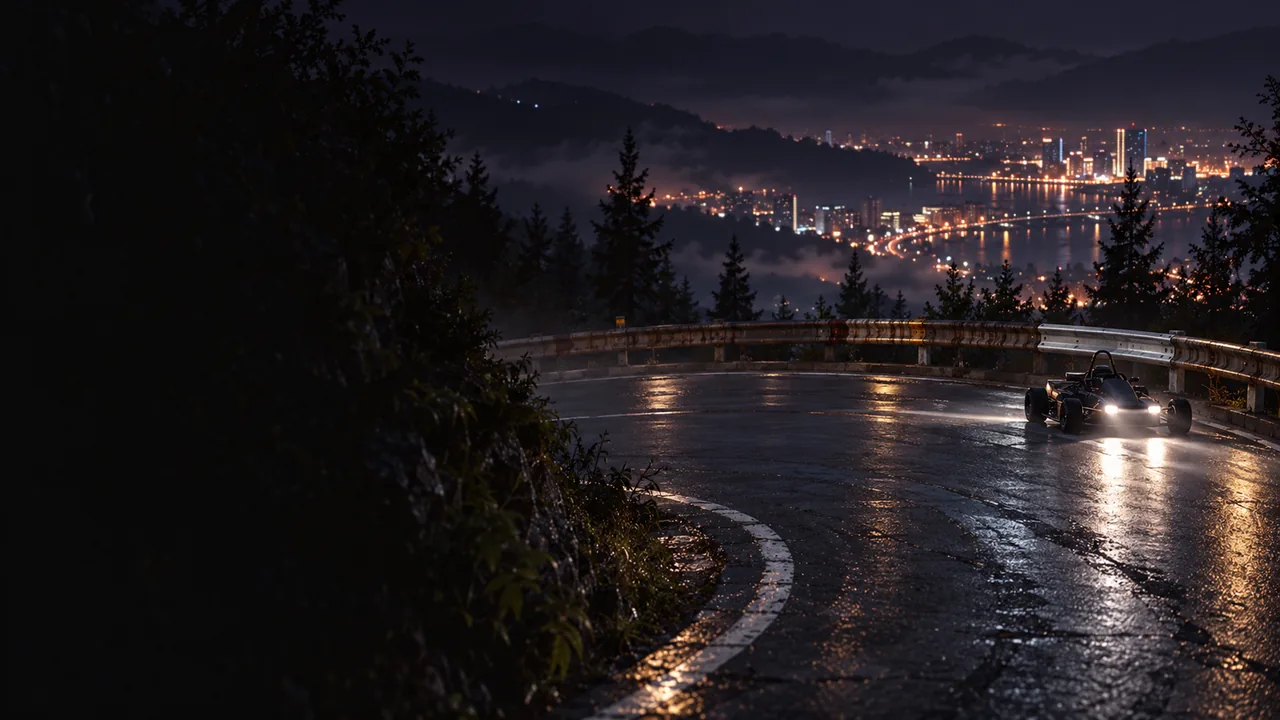
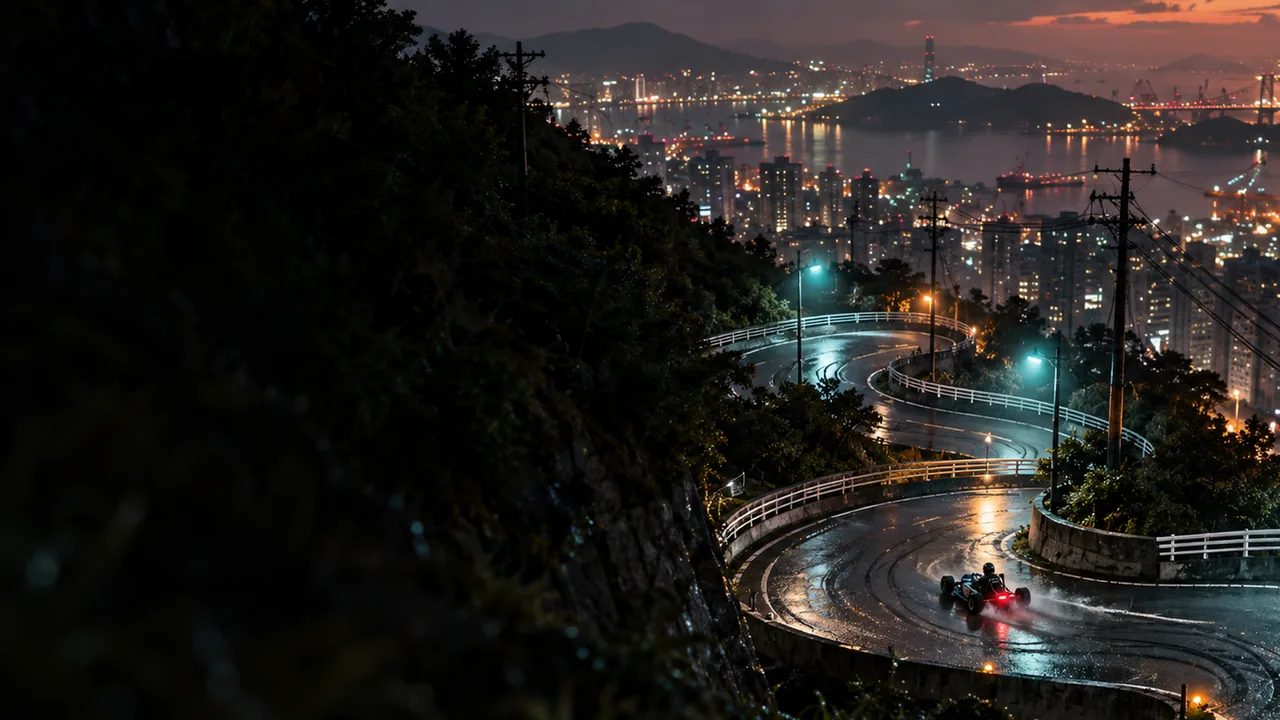
The first season of Municipal Ghosts. Run six contracts a week, climb a twenty-step standing for prizes, and win tickets to race the crew's own ghosts. It comes with our biggest update yet: a drift that bites harder on entry, a Route Book told in chapters, a garage you earn, races that find you and ghosts that race you.
Open the Route Book and press Contracts. Each contract is a course and a time to beat, set by a ghost the crew recorded. Every player gets the same six, and a new board goes up each week. Try a contract as often as you like.
The game never asks you to save N2O. Amber and Red ask the opposite: keep it burning. The share you need comes from the crew's own run on that course, so it is fair on every track.
Contract runs never write to the Time Attack boards. Throw a risky line at a Red contract without touching your best.
Your first clear of each contract adds points to your season standing: Grey 1, Amber 2, Red 4. Every six points is a step. The top step also needs six Red clears. Standing is earned only; there is nothing to buy.
When the season closes, your final step stays on your record as your Preseason mark.
Clears sync with Steam Cloud. A step you reach on another PC is paid the next time you open Contracts.
Clear a Red contract and it pays a boss ticket for that course. Use the ticket to race one of the crew's ghosts, alone, head to head.
The boss card tells you who you are racing and where. It never shows their time.
Each course has up to three crew ghosts, each faster than the last. Beat one and the next one is waiting.
A ticket holds three tries. A try is spent only when the race actually starts, never by backing out.
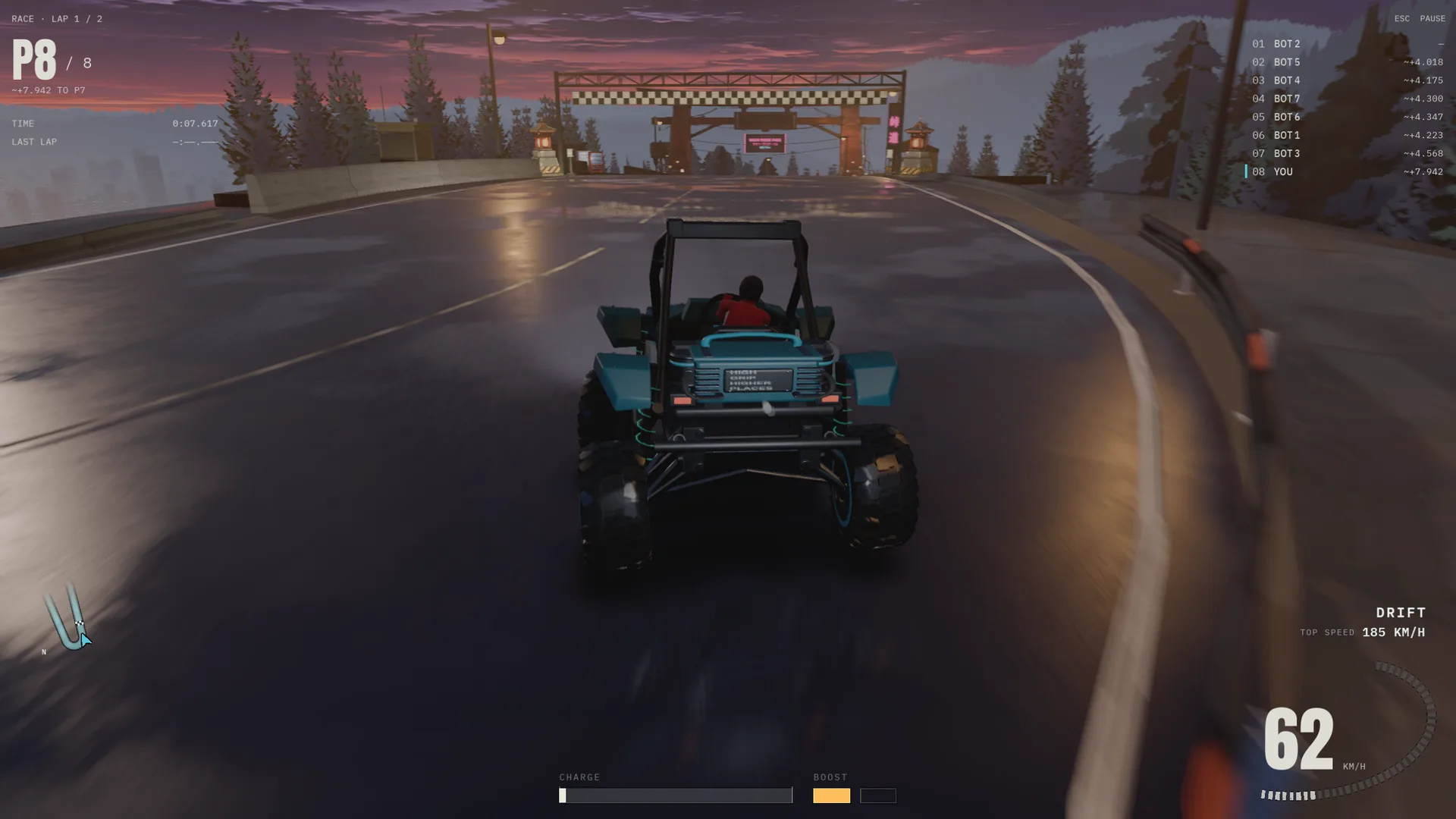
Press Find Race and you go straight into a race, with no lobby to wait in. Your finishing place moves your rating.
Your first five races are provisional. After them you get a rating, shown on the Find Race panel and beside your place on the results board. There are no ranks or tiers yet: just the number.
Bring the tune you built in the garage. Only physics mods stay out of ranked races.
Karts a lap apart pass through each other. A ranked racer who does not drive in the first 30 seconds is removed from the race and ranked with the racers who left.
Preseason is a Playtest season. Its contracts, prizes and length can still change, and so can anything you earn in it. We will say when it ends before it does.
A drift now starts as a throw. The kart rotates fastest the moment you press, then settles into its angle, so the entry feels like a decision and not a slow push.
The throw is quicker now. The stored entry torque lands within 0.3 s and the steering fades in behind it. After you release Shift, you keep more steering. Tok-tok, cuts and U-turns all start sharper.
Reverse, hold the brake and drift: the nose swings round the way you point it, and the drift ends when you face forward again.
Every kart now has its own hitbox, its own mass and a small handling character. Contact knows who is heavier. Kart 77 keeps the default tune.
Trailing karts get half the catch-up pull they had, and the draft bonus is twice what it was. To close a gap, get into the slipstream of the kart ahead.
If you press drift during its cooldown, a red DRIFT RECHARGING note and a cue tell you why nothing happened.
Handling changed, so Time Attack and Drift boards start fresh. Your earlier records stay saved on their old boards.
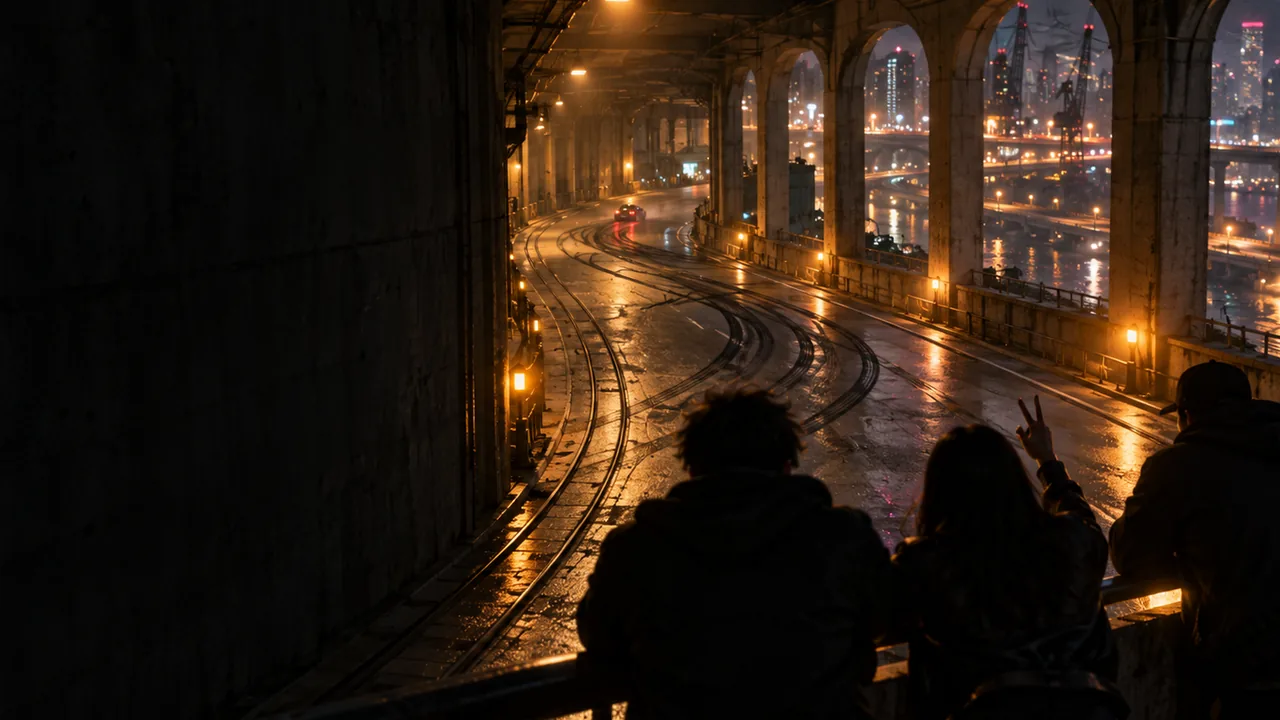
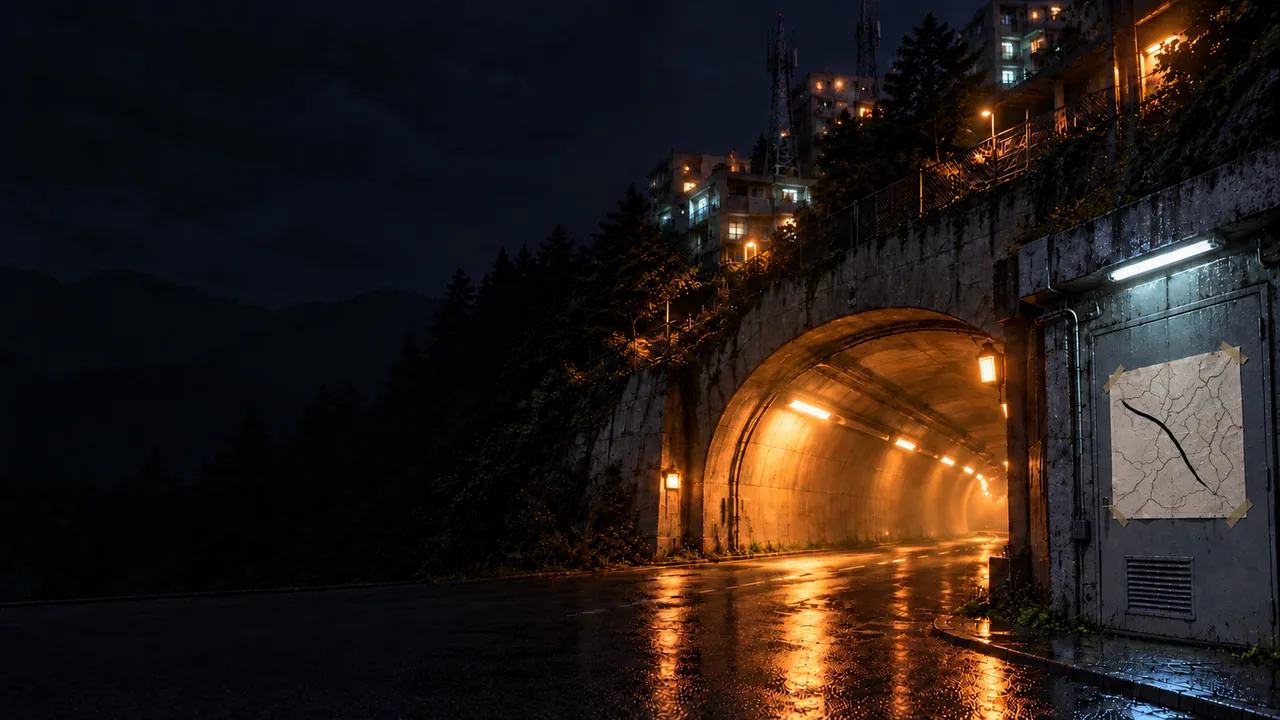
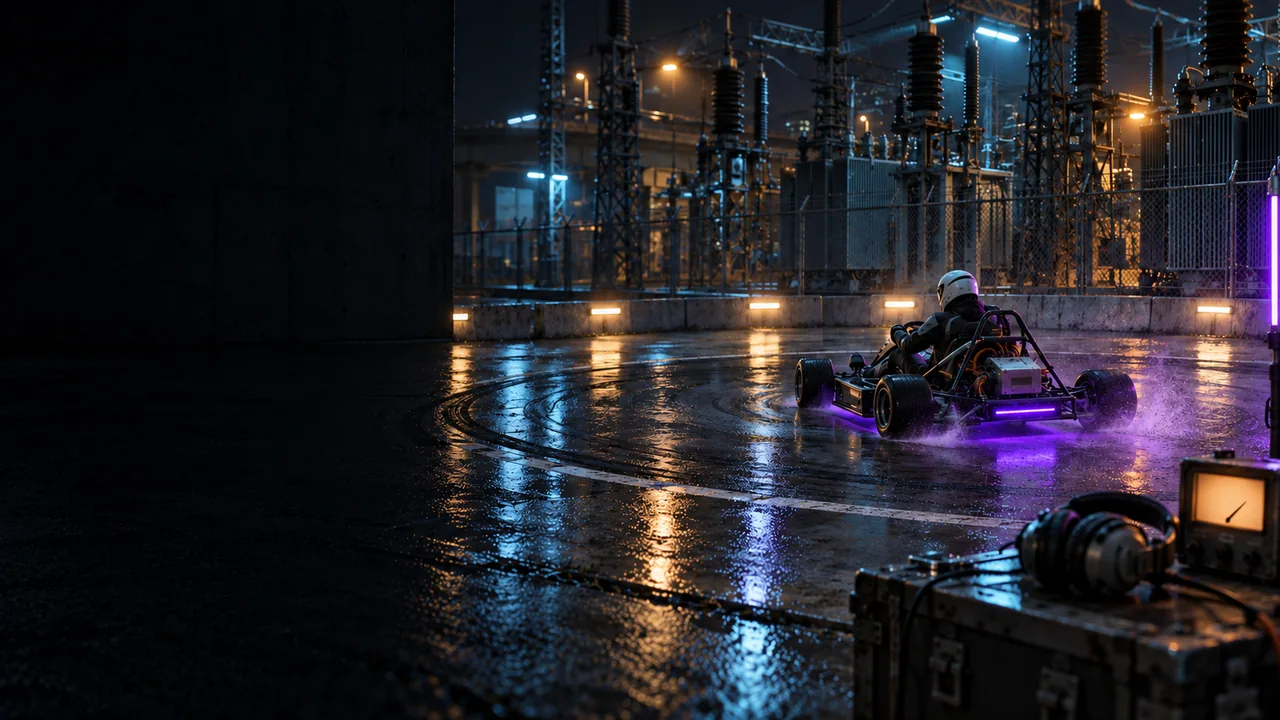
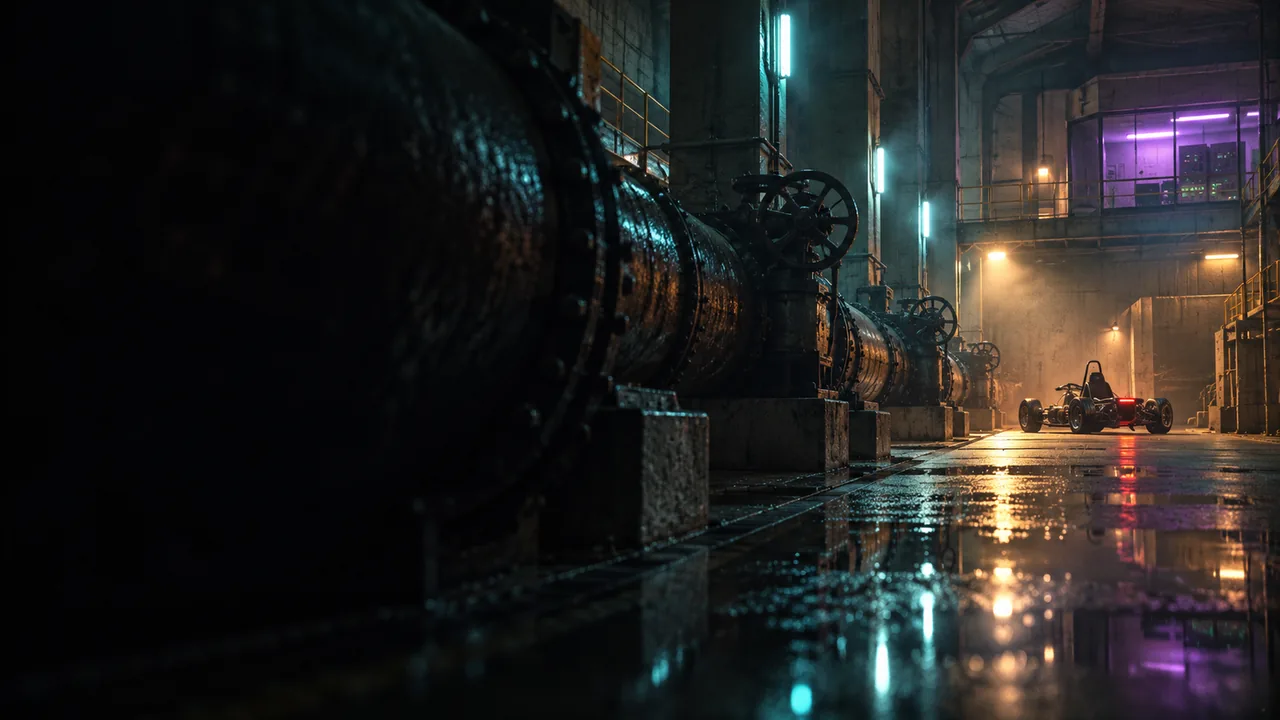
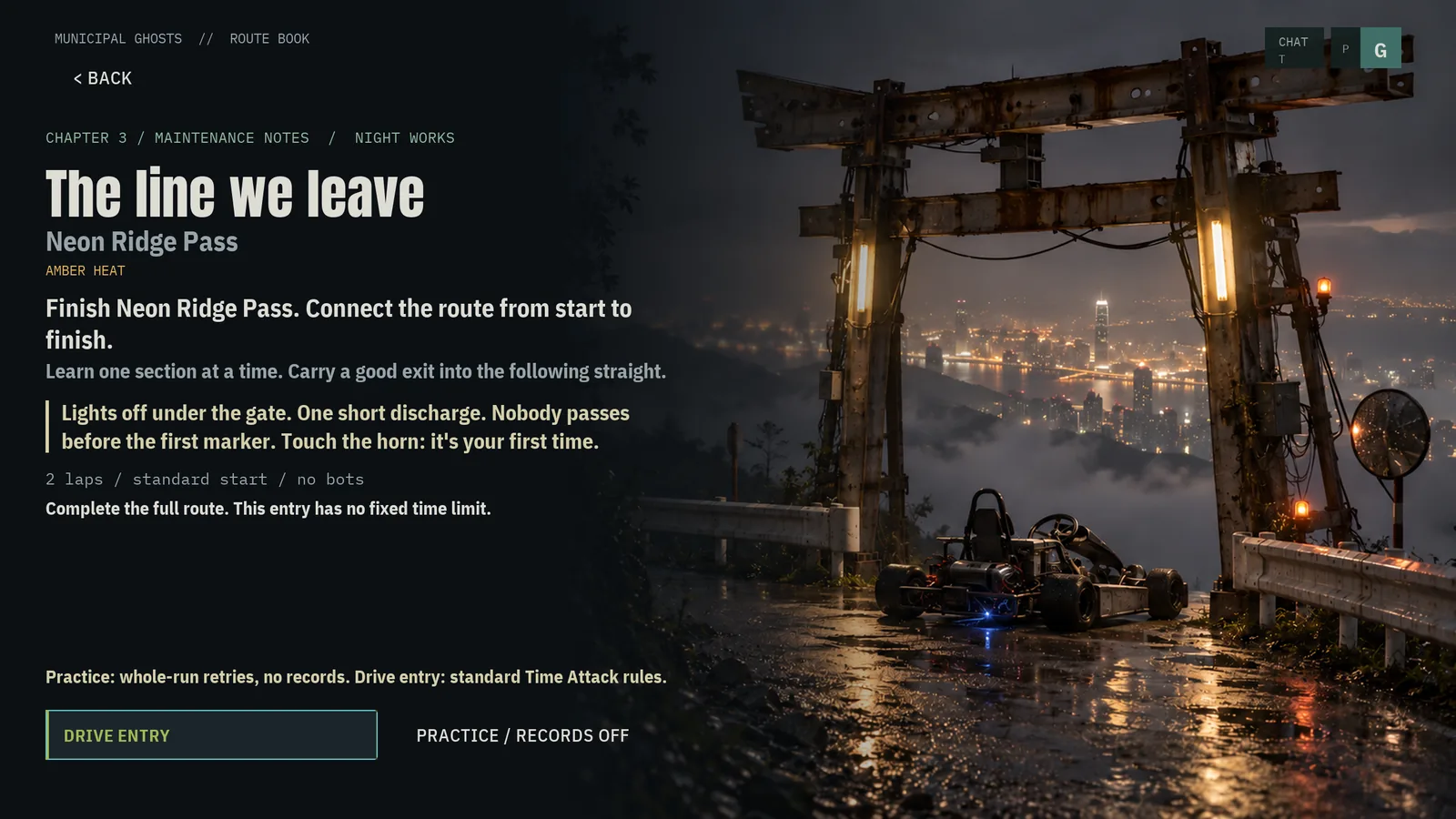
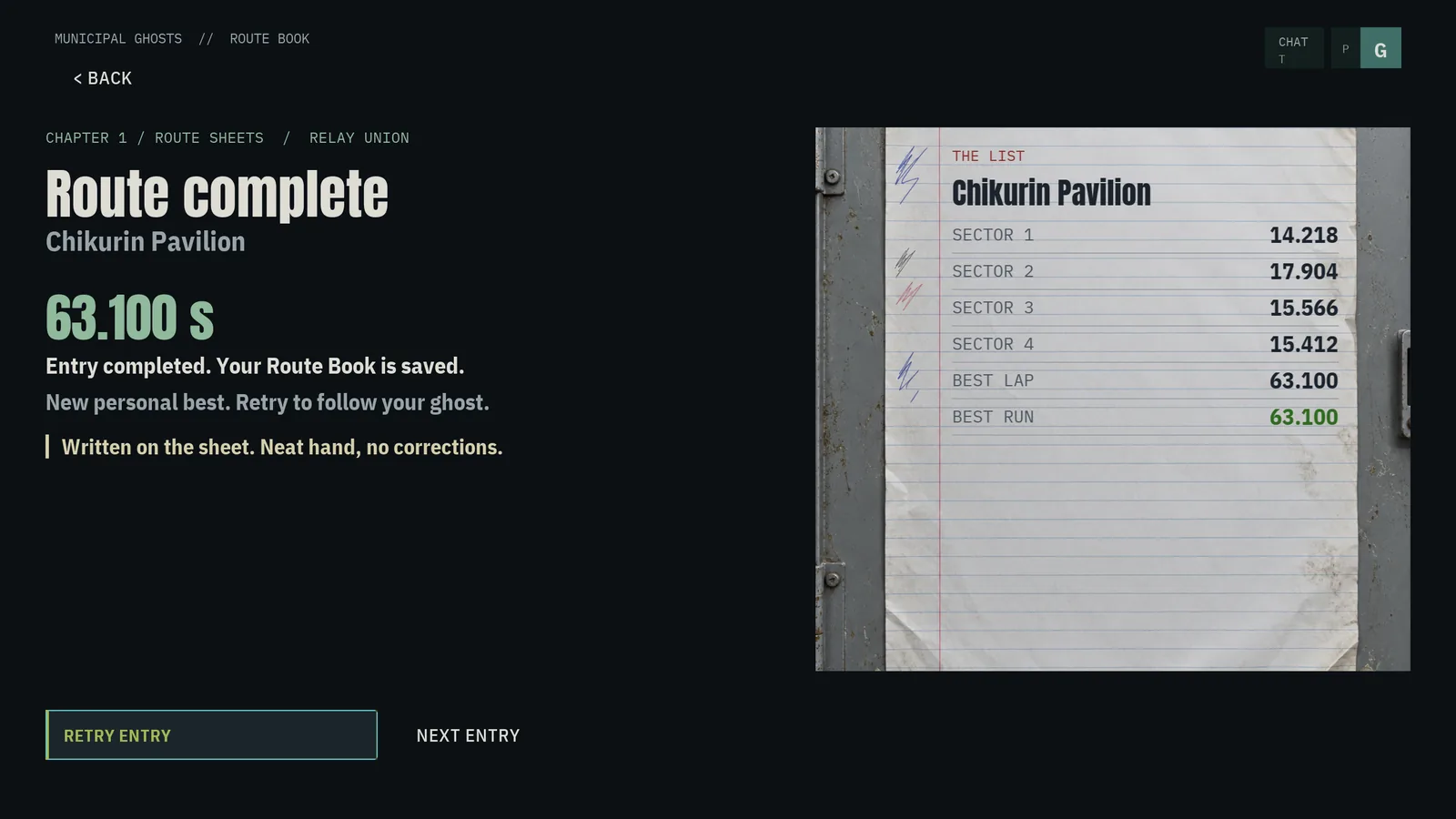
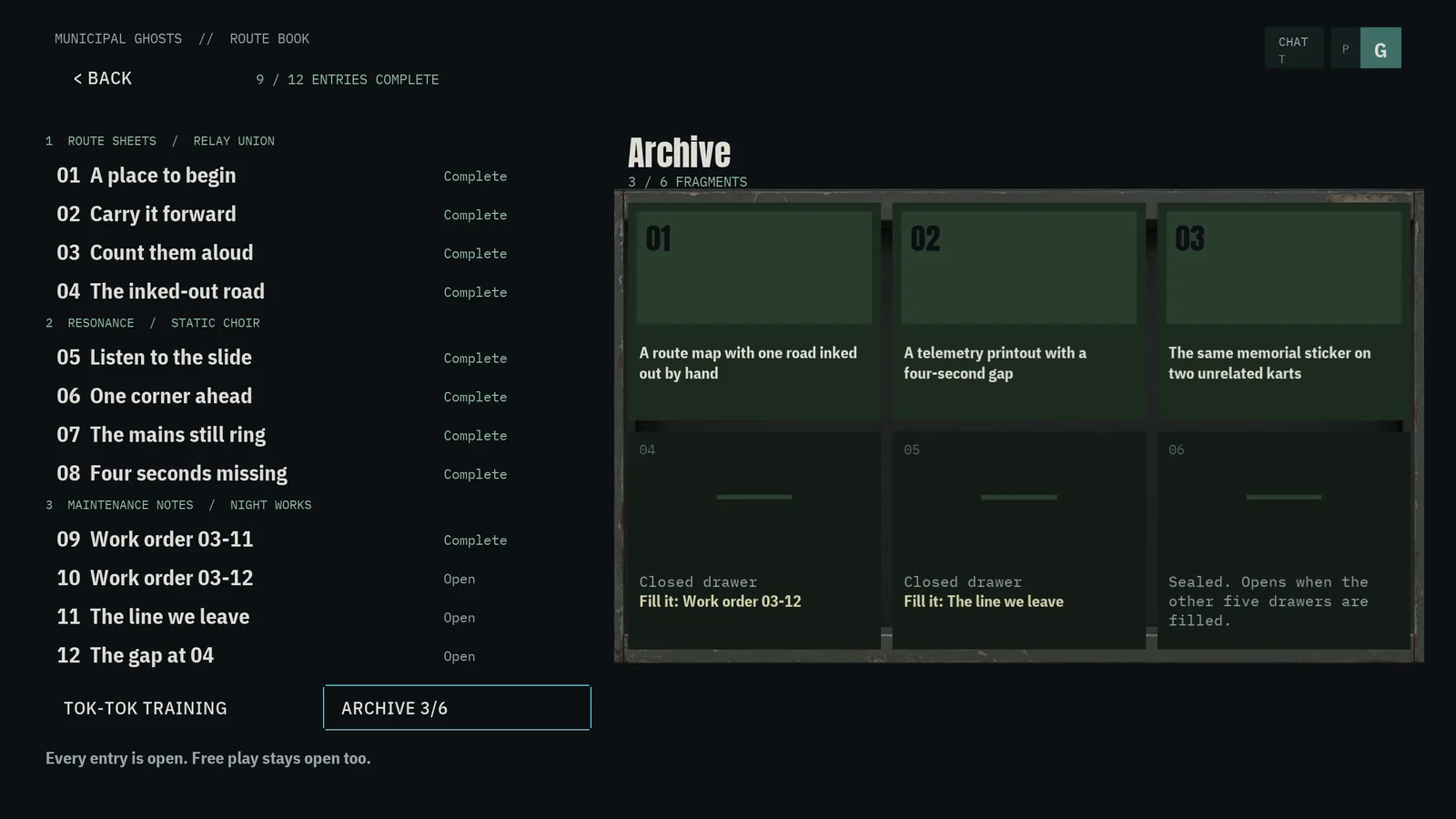
The Route Book is now told in three chapters. Each belongs to a crew who drove these roads before you, and each entry is a route, a technique and two lines in that crew's voice.


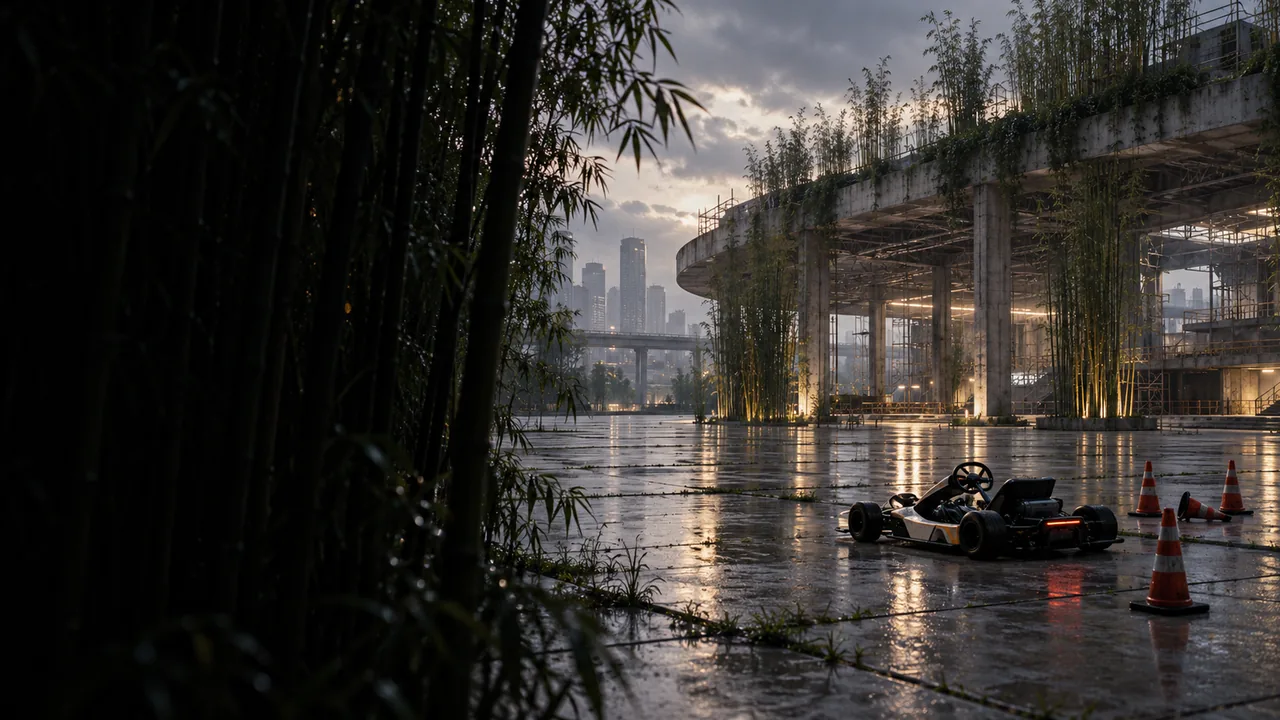
Route Book art, as it appears on the entry cards in game


Route sheets. Practical, counts the strings out loud. Chikurin Pavilion, Sprint Dash, Last Tram Descent, Relay Heights.
Resonance. Engineers who argue about names. Tok-Tok Circle, Hairpin Chain, Pumpworks, Sasanami.
Maintenance notes. Aliases and work orders. Fogline, Crooked Hill, and two runs of Watanabe Pass.

Six drawers fill as you finish entries. The sixth stays sealed until the other five are full. Every entry is open from the first launch: the book suggests an order, it never locks a route. Close the last one and the results screen says so.
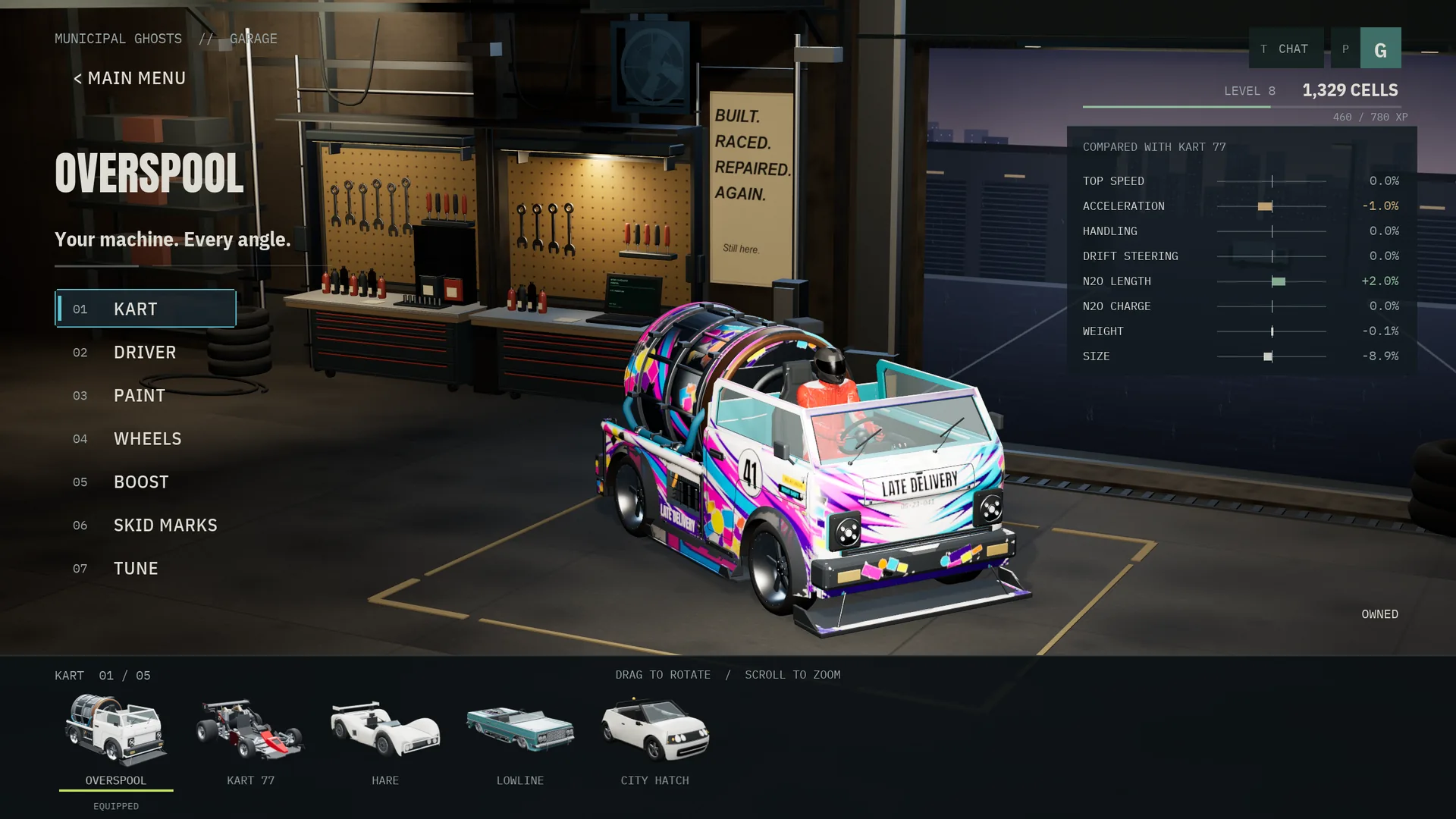
The garage is now an inventory. Start with a base set of karts, rims, drivers and paint, and earn the rest by racing. Nothing you earn makes a kart faster.
Finished Time Attack, Drift, offline and room races pay Cells and XP for each minute you race, so a short track pays the same per minute as a long one. Route Book entries, course bests and top-10 board places pay too.
Every level pays Cells, and every fifth level adds a drop. Locked items still preview in the garage, so you can see what you are working towards.
Got a duplicate? Salvage it for Cells, or trade three in for one new item.
The shop has a Crates tab. Spend Cells to open a crate of paints, boost effects, trails, drivers or karts, one at a time or ten at once. A crate never gives you an item you already have, and its odds are on screen.
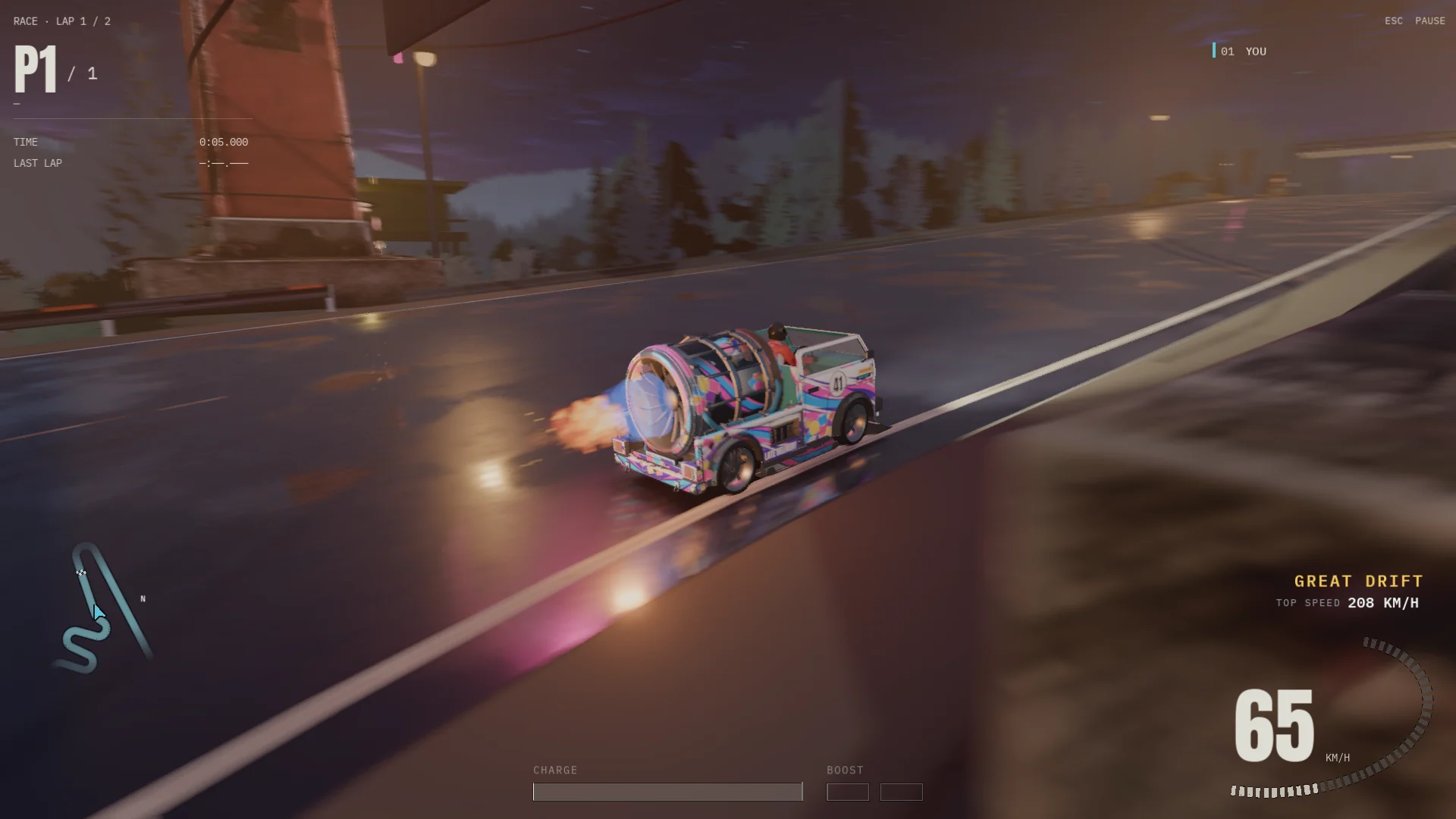
A livery is now a kart of its own, with its own card in the Kart lane. Night Shift is one. Late Delivery is the Overspool kei truck in panel art, numbers and wear. A livery kart takes no paint.
Sable Works, the shop, now sells three rims of its own: Atelier, Filigree and Nocturne, under a WHEELS row.
New players start with Stock paint in every colour. Gloss paints are earned, and the paint crate holds them.
The garage is now an indoor room, with a clearer Kart performance panel. Point at a stat to see what it does.
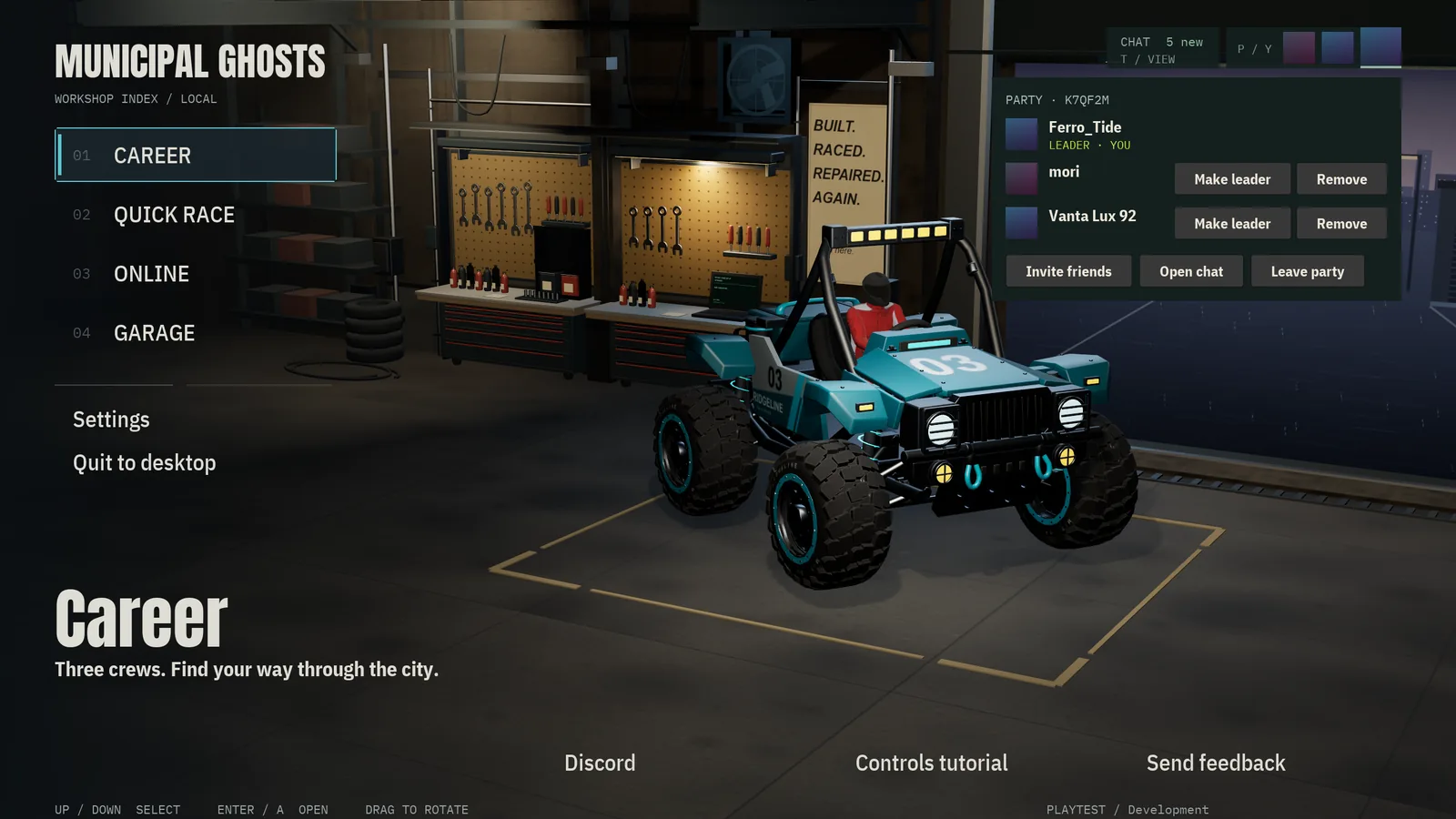
Home has a new layout. Ranked racing sits on top, then the Race and Customize groups. A notification bell holds season news.
A loading screen now shows the track you are about to race, a ghost lap of it and a driving tip.
Rooms now carry every player's paint and livery. Rival karts, seat cards and spectators show them as their owners chose.
Settings > Audio > My Music plays a folder of your own MP3, FLAC and WAV files on the station instead of the album.
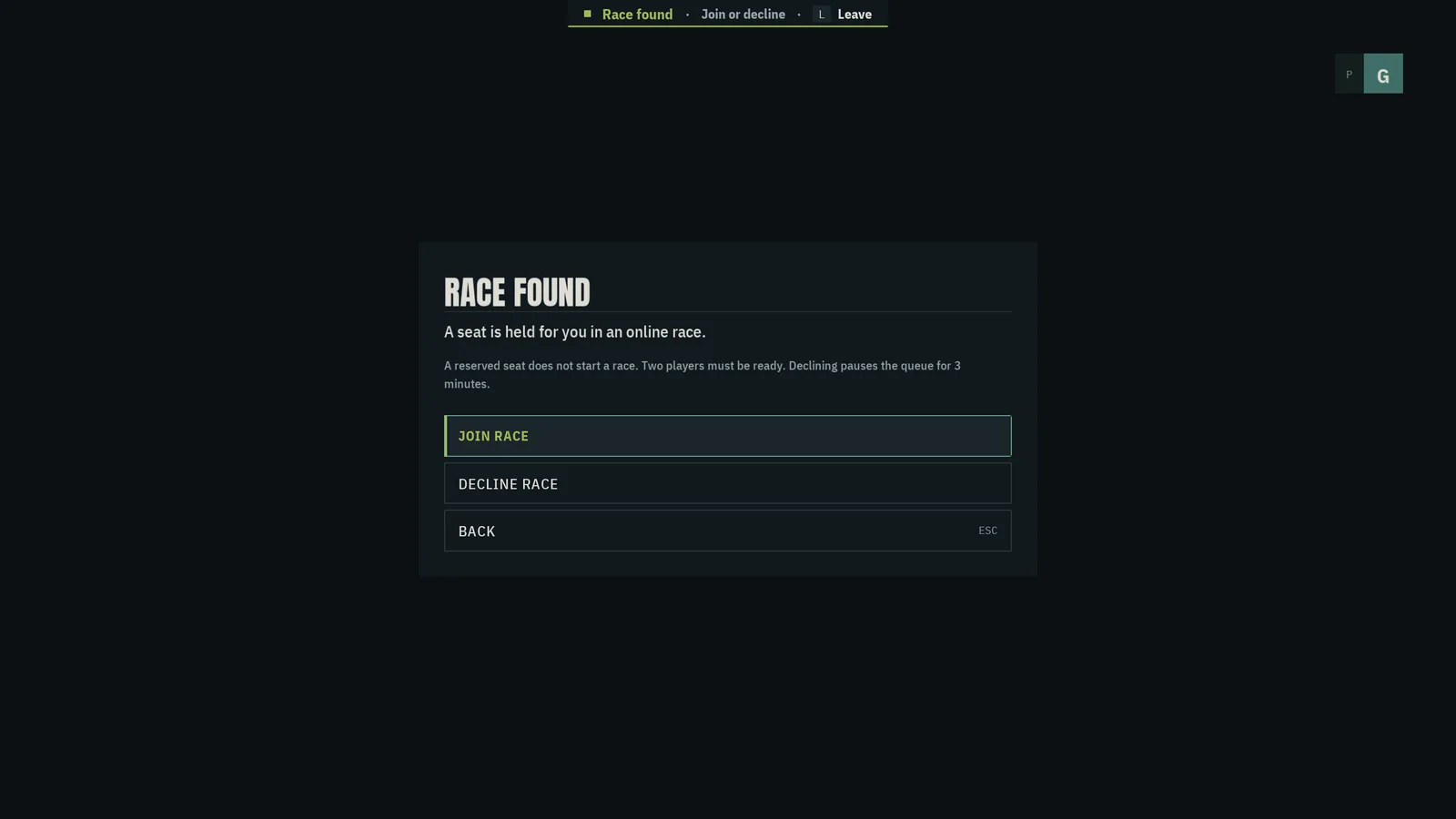
Join the online race queue with one click and keep doing what you were doing. A plate at the top of the screen counts the wait. When a match is found, a sound plays and you join the race at once.


An opt-in queue that matches you with players near your standing. A sound plays when a match is found, and you join at once. After the race, Auto-requeue takes you to the next one.
Ask everyone online to join your room. The call also reaches the players' Discord.
Copy invite link gives you a Steam link to your room. A friend who clicks it in Steam chat starts the game and joins you.
Turn on GHOST FIELD in Time Attack to race up to three other players' board ghosts at once: the times just ahead of yours.
When someone passes your Time Attack time on Steam, the game tells you who.
Rooms seat up to 16 racers. Race a points Series or a Red and Blue Team series. The race starts when everyone is ready, and the host can ask the room to ready up.
The replay viewer gets a camera list, a trackside broadcast camera and two ways to read a line: your path as a string of ghosts, and the full lap painted by speed.
FOLLOW, TRACKSIDE, TOP and FREE on keys 1 to 4. TRACKSIDE cuts between posts along the recorded line, like a broadcast.
B shows the PATH: a ghost every 0.25 s over the last 3 s. M shows the LINE: the whole lap coloured from slow to fast, with a km/h key.
SAVE REPLAY works in every build, online races included, and races from older handling versions stay in your history.

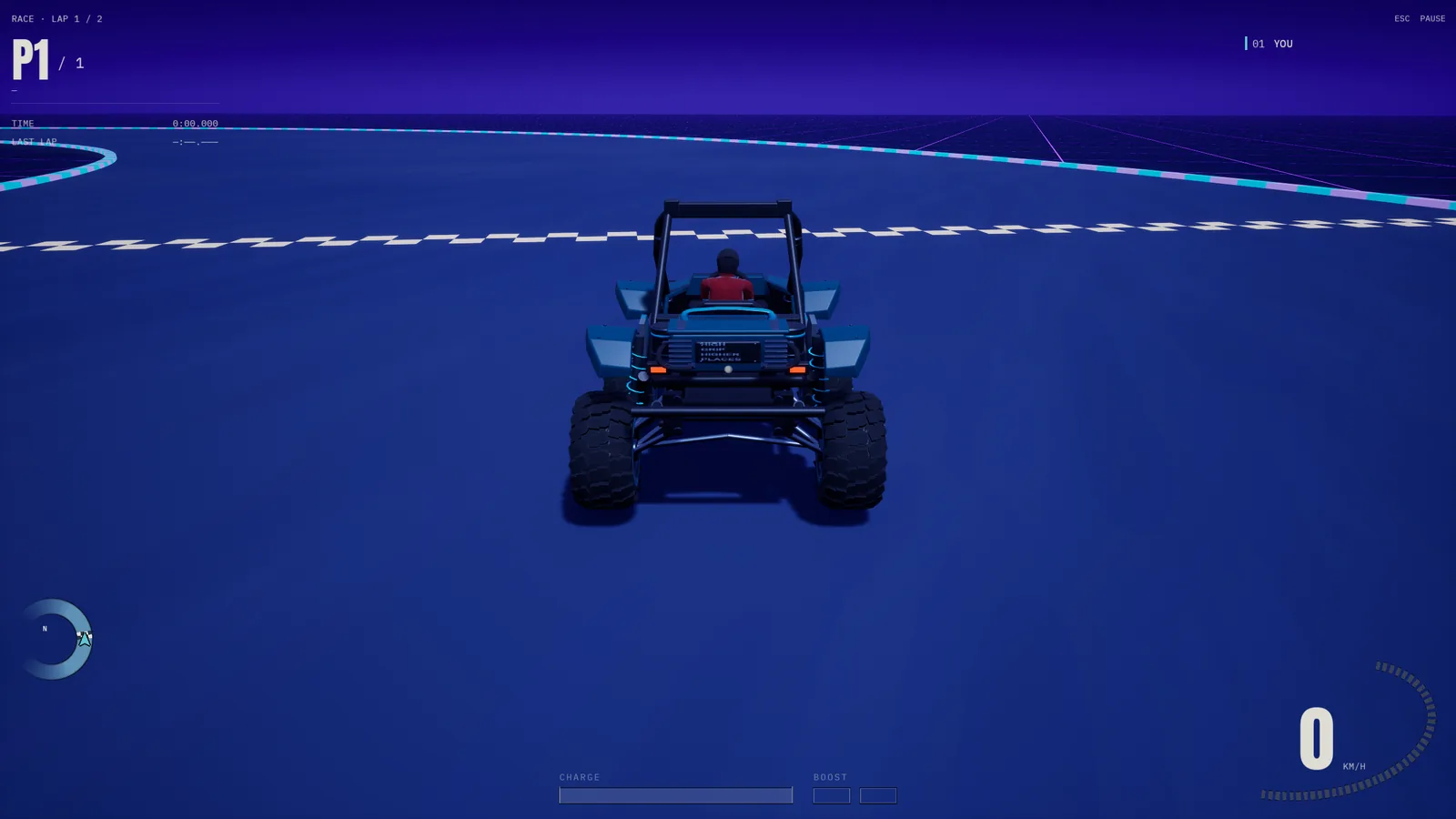
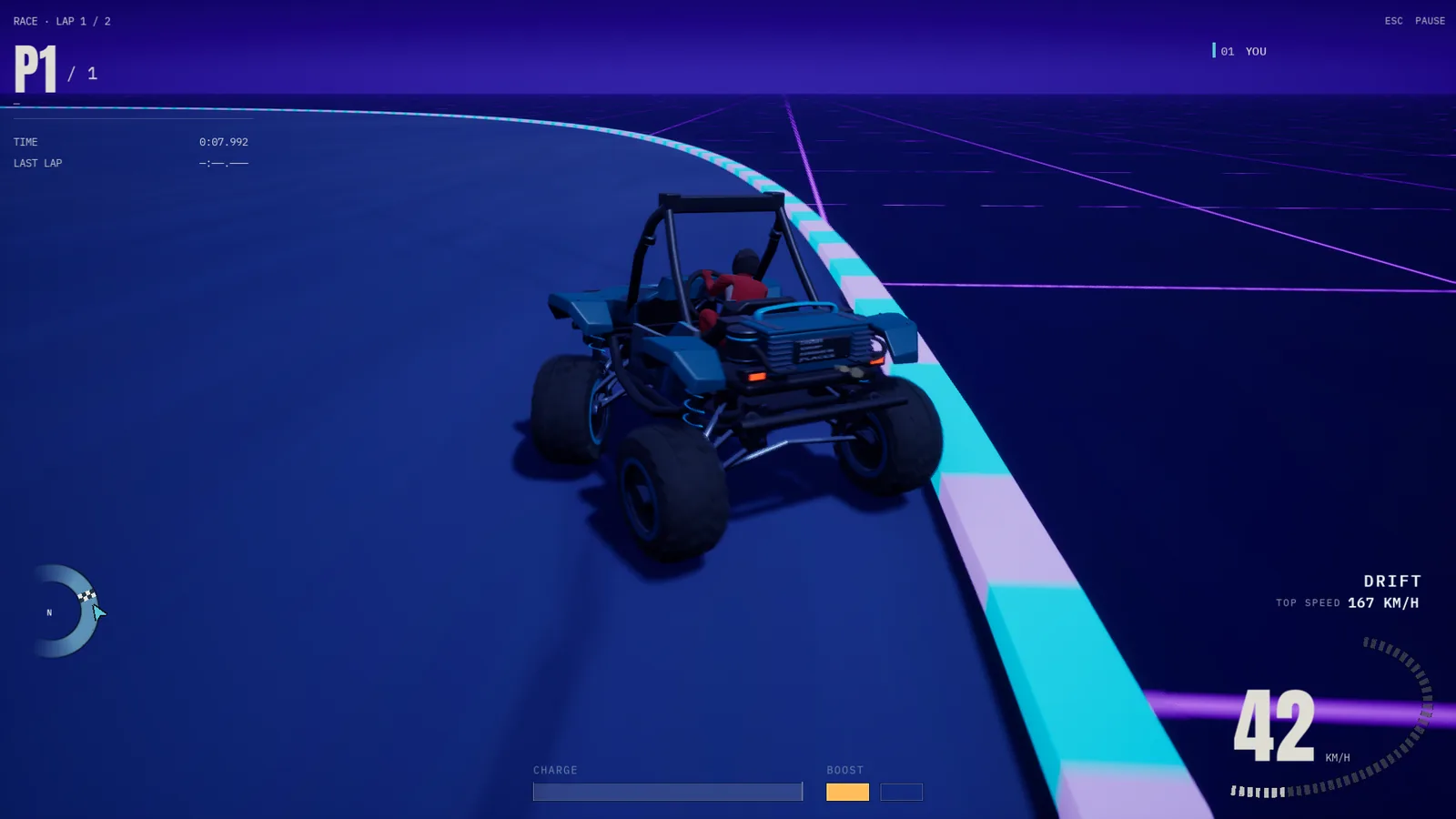
The lit bars that crossed the road every 10 m strobed at speed. They are gone. Alternating cyan and lavender kerb blocks carry the speed cue along the edges instead, and Tok-Tok Circle and the other proving grounds get a start and finish checker.
Time Attack and Drift records start fresh in this update. Earlier records stay saved on their previous boards. Update to race online.
Municipal Ghosts has been in an open Steam Playtest since September. In that time we have shipped a new build most weeks, and nearly every one changed because of something you told us: in Discord, in a crash report, or in a replay of a drift that went wrong. The game is unfinished and you play it anyway, and then you tell us what is fun and what is not. Thank you. A racing game lives or dies on how it feels in your hands, and we cannot find that alone.
So we want to tell you more about what we are working on, and why.
This autumn we rebuilt the drift model from the ground up. The old one had grown too many special cases. The new one is a few simple rules, and tok-tok, cuts and U-turns all come out of the same physics on every kart. This update keeps going in that direction: the drift entry is now a throw, reversing gives you a real J-turn, and every kart has its own weight. Each handling change resets the Time Attack boards, and we do not take that lightly. Your old records stay saved on their old boards.
Earlier updates mostly did one big thing. This one is several pieces of work that ran side by side: the Route Book chapters, the garage, the new online systems and the replay viewer. Some of it is early on purpose. Cells, levels and the inventory are the part of a game that is hardest to get right on paper, and we want to shape them around how you actually play before the game is finished. Expect the numbers to move.
Preseason is the first time the game has a season. Contracts, standing and boss tickets give you something to chase every week, and they are the part we most want to hear about: too hard, too easy, a contract you hate. Preseason is a Playtest season, so its rules, prizes and length can still change.
Other things are more experimental. Find Race is switching on in stages while we watch how it behaves. Ghost fields, physics mods and the track editor are ideas we like a lot, and they will stay if they keep earning their place.
Then there are things we know matter and have not reached yet. Some courses still wear early scenery. Rivals need a rebuild for the new handling. Steam Deck and Linux support is experimental. These are on the list for the next updates, alongside more courses and karts.
Thank you for racing with us. If you have not yet, add Municipal Ghosts to your Steam wishlist, and come and find us in Discord.
Dead Air Works